1. Eternal memory: why do we want to be remembered liveforever?
Every human being, at least once in their life, has asked themselves this question: “What will remain of me when I’m gone?”
Memory is the invisible thread that unites generations, a bridge spanning time and preventing our existence from slipping into nothingness. It’s not just vanity: it’s a profound need, rooted in human nature itself.
1.1 Social research on the meaning of memory
1.1.1 The 10 most beautiful phrases on memory and legacy
- “To be remembered is to live twice.” – Marcus Tullius Cicero
- “Memory is the treasure and guardian of all things.” – Cicero
- “What we do in life echoes in eternity.” – Maximus Decimus Meridius (The Gladiator)
- “Death is nothing, but to be forgotten is to die twice.” – African Proverb
- “A man dies twice: once when he breathes his last, once when he is forgotten.” – Anonymous
- “The people we love never truly go away. They walk beside us, every day, invisible but present.” – Anonymous
- “Our legacy is not what we leave in the hands of others, but what we leave in their hearts.” – Anonymous
- “Memory is the diary that each of us carries with us always.” – Oscar Wilde
- “It is not material possessions that make a legacy eternal, but the memories and values we leave behind.” – Anonymous
- “Preserving memory is the most authentic way to give meaning to our passage through the world.” – Mauro Pompetti
1.1.2 What philosophers and poets said about eternal memory
A collection of immortal reflections on memory and eternity
Philosophers and poets have always pondered the theme of memory and eternal remembrance. For them, being remembered is not mere vanity, but a way to live on beyond the limits of time and death. Here we gather some of their most powerful voices.
Quotes
“The life of the dead consists in the memory of the living.” – Marcus Tullius Cicero
“Memory is the treasure and guardian of all things.” – Sophocles
“Mortal men are made of memories: what remains of them is what others do not forget.” – William Shakespeare
“Memory is the only paradise from which we cannot be driven.” – Emily Dickinson
“Fame survives death, and what is great never entirely dies.” – Ovid
“To live in the memory of others is never to die.” – Seneca
“You were not made to live like brutes, but to follow virtue and knowledge.” – Dante Alighieri
“Memory is an encounter with eternity.” – Khalil Gibran
“Man dies, but the song that celebrates him lives forever.” – Pindar
“Oblivion is the true death. Memory is the only form of immortality.” – Jorge Luis Borges
Eternal memory is a universal theme that spans the centuries. From Greek philosophers to modern poets, every voice emphasizes how memory is the only true instrument of immortality. Preserving and passing on memories means continuing to live in the hearts and minds of those who come after us.
Keep your memories forever on LiveForever.cloud
1.1.3 Remembering Ancestors: The Value in Different Cultures
The need to remember those who came before us is universal. Every civilization, throughout history, has found a way to keep the memory of our ancestors alive: through rituals, myths, celebrations, or symbolic objects. This gesture is not only an act of gratitude, but also a way to strengthen one’s identity and feel part of a larger story.
1.1.3.1 Africa: Ancestors as a Living Presence
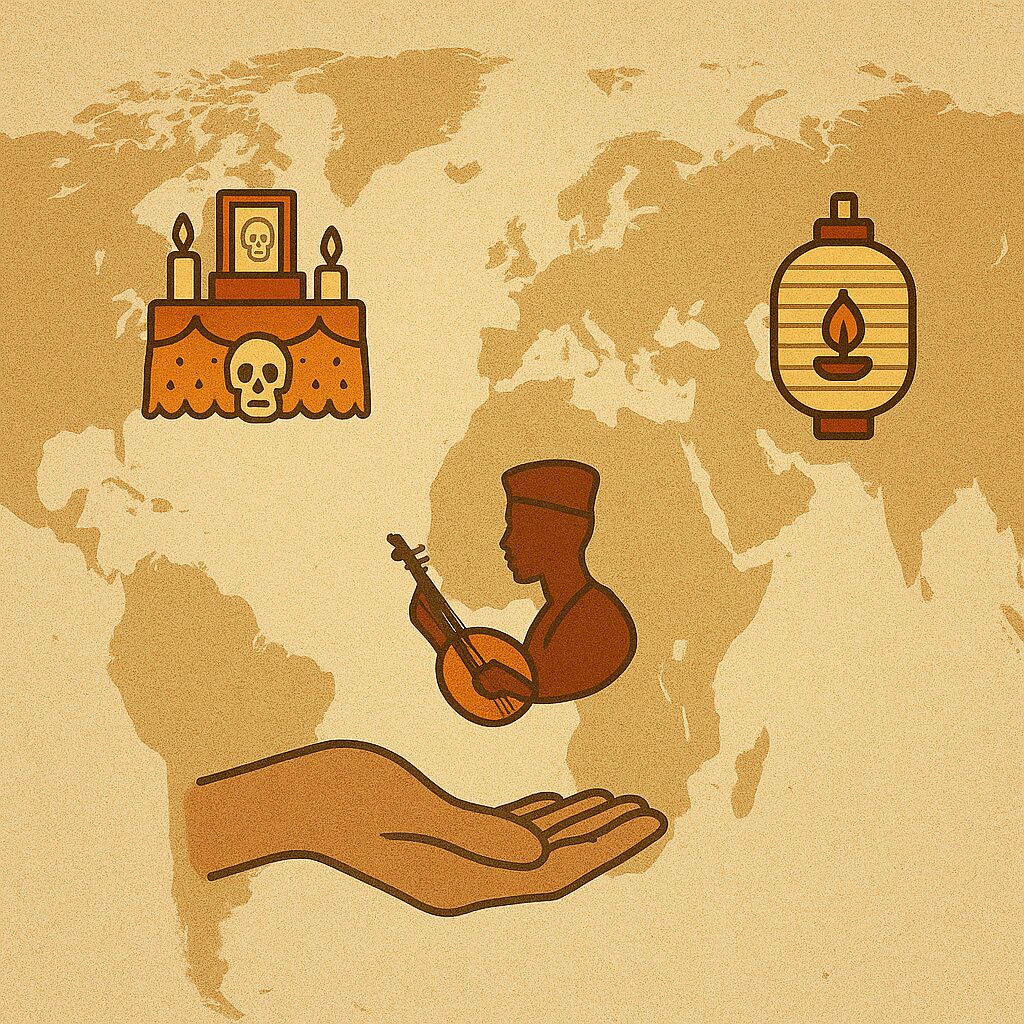
In many African cultures, especially among the Bantu peoples, ancestors are not seen as distant figures, but as “living-in-memory.” They watch over their descendants, bringing blessings or warnings. Ancestor worship is expressed through offerings, invocations, and community celebrations. Remembering them is not an act of nostalgia, but a way to ensure harmony and protection.
1.1.3.2 East Asia: Respect and Continuity
In China, Korea, and Japan, ancestor worship is a cornerstone of society. Through rituals such as Qingming (the “Tomb Sweeping Festival” in China) or Japanese home altars (butsudan), families maintain a daily connection with the deceased. Here, remembrance becomes a filial duty, an expression of Confucianism: honoring parents and ancestors is an integral part of family ethics and continuity.
1.1.3.3 Latin America: The celebration of life that continues
In Mexico, Day of the Dead is one of the most well-known traditions: a riot of color, music, and altars adorned with flowers, food, and photographs. It’s a ritual that combines Christianity and ancient Aztec beliefs, where the deceased return for a night to be with the living. Here, memory becomes celebration, transforming grief into a celebration of shared life.
1.1.3.4 Europe: memory and sacredness of time
European cultures have developed different ways of honoring ancestors. In ancient societies, such as the Romans, there was the cult of the Lares and Penates, household deities linked to ancestors. In Christianity, the commemoration of the dead (November 2) is a collective moment to renew the spiritual bond with those who are no longer with us. Today, visits to the cemetery, flowers, and photographs on gravestones are the continuation of this long tradition.
1.1.3.5 Oceania: Ancestors as Guardians of Nature
In Maori and Polynesian cultures, ancestors live not only in memory, but also in the landscape: mountains, rivers, and sacred trees are considered repositories of their life force. Remembering ancestors also means protecting the land and respecting its spirit.
The universal value of memory
Though they take different forms, all cultures share the same core: remembering ancestors means not feeling alone, but part of a chain that unites past, present, and future. It is an act that gives identity, strength, and a sense of continuity.
1.2 Memory as the root of our identity
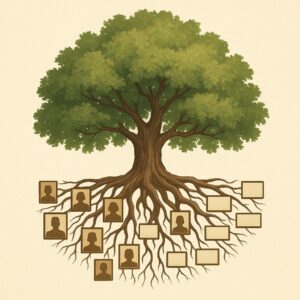
We are not just what we experience today. We are made of stories, memories, faces, emotional legacies.
- Remembering means giving continuity to our selves.
- Without memory, our identity would be lost in time.
- This is why every culture has invented rituals, scriptures, and monuments: to resist oblivion.
1.3 The universal need to leave a mark
The fear of being forgotten isn’t just individual. It’s collective.
- The pyramids in Egypt, epic poems, Renaissance portraits: all examples of the search for eternity.
- Today, with digital technology, the desire has transformed: we want to save photos, chats, voices, emotions.
- Not out of selfishness, but out of love: leaving something for those who come after us.

1.4 To remember is to love twice
When we remember someone who is no longer with us, we bring them back to life.
- Memory is an act of love that never ends.
- It allows our children and our children’s children to know our emotions.
- Being remembered is the purest form of emotional immortality.
“To be remembered is to live twice.”
1.5 Memory in world cultures
- In Mexico: The Day of the Dead celebrates ancestors with colors and altars.
- In Japan: Ancestor worship (Obon) keeps family ties alive.
- In Africa: Griots pass down tribal genealogies by word of mouth.
Every people, with their different languages, expresses the same need: never to truly disappear.