1. Eternal memory: why do we want to be remembered liveforever?
Every human being, at least once in their life, has asked themselves this question: “What will remain of me when I’m gone?”
Memory is the invisible thread that unites generations, a bridge spanning time and preventing our existence from slipping into nothingness. It’s not just vanity: it’s a profound need, rooted in human nature itself.
1.1 Social research on the meaning of memory
1.1.1 The 10 most beautiful phrases on memory and legacy
- “To be remembered is to live twice.” – Marcus Tullius Cicero
- “Memory is the treasure and guardian of all things.” – Cicero
- “What we do in life echoes in eternity.” – Maximus Decimus Meridius (The Gladiator)
- “Death is nothing, but to be forgotten is to die twice.” – African Proverb
- “A man dies twice: once when he breathes his last, once when he is forgotten.” – Anonymous
- “The people we love never truly go away. They walk beside us, every day, invisible but present.” – Anonymous
- “Our legacy is not what we leave in the hands of others, but what we leave in their hearts.” – Anonymous
- “Memory is the diary that each of us carries with us always.” – Oscar Wilde
- “It is not material possessions that make a legacy eternal, but the memories and values we leave behind.” – Anonymous
- “Preserving memory is the most authentic way to give meaning to our passage through the world.” – Mauro Pompetti
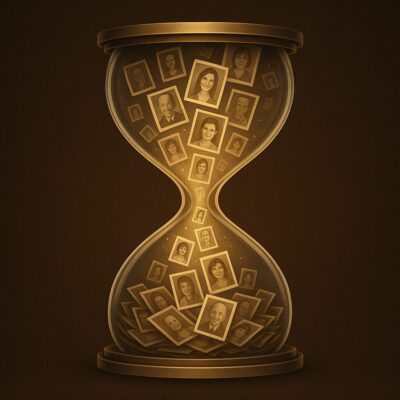
1.1.2 What philosophers and poets said about eternal memory
A collection of immortal reflections on memory and eternity
Philosophers and poets have always pondered the theme of memory and eternal remembrance. For them, being remembered is not mere vanity, but a way to live on beyond the limits of time and death. Here we gather some of their most powerful voices.
Quotes
“The life of the dead consists in the memory of the living.” – Marcus Tullius Cicero
“Memory is the treasure and guardian of all things.” – Sophocles
“Mortal men are made of memories: what remains of them is what others do not forget.” – William Shakespeare
“Memory is the only paradise from which we cannot be driven.” – Emily Dickinson
“Fame survives death, and what is great never entirely dies.” – Ovid
“To live in the memory of others is never to die.” – Seneca
“You were not made to live like brutes, but to follow virtue and knowledge.” – Dante Alighieri
“Memory is an encounter with eternity.” – Khalil Gibran
“Man dies, but the song that celebrates him lives forever.” – Pindar
“Oblivion is the true death. Memory is the only form of immortality.” – Jorge Luis Borges
Eternal memory is a universal theme that spans the centuries. From Greek philosophers to modern poets, every voice emphasizes how memory is the only true instrument of immortality. Preserving and passing on memories means continuing to live in the hearts and minds of those who come after us.
Keep your memories forever on LiveForever.cloud
1.1.3 Remembering Ancestors: The Value in Different Cultures
The need to remember those who came before us is universal. Every civilization, throughout history, has found a way to keep the memory of our ancestors alive: through rituals, myths, celebrations, or symbolic objects. This gesture is not only an act of gratitude, but also a way to strengthen one’s identity and feel part of a larger story.
1.1.3.1 Africa: Ancestors as a Living Presence
In many African cultures, especially among the Bantu peoples, ancestors are not seen as distant figures, but as “living-in-memory.” They watch over their descendants, bringing blessings or warnings. Ancestor worship is expressed through offerings, invocations, and community celebrations. Remembering them is not an act of nostalgia, but a way to ensure harmony and protection.
1.1.3.2 East Asia: Respect and Continuity
In China, Korea, and Japan, ancestor worship is a cornerstone of society. Through rituals such as Qingming (the “Tomb Sweeping Festival” in China) or Japanese home altars (butsudan), families maintain a daily connection with the deceased. Here, remembrance becomes a filial duty, an expression of Confucianism: honoring parents and ancestors is an integral part of family ethics and continuity.
1.1.3.3 Latin America: The celebration of life that continues
In Mexico, Day of the Dead is one of the most well-known traditions: a riot of color, music, and altars adorned with flowers, food, and photographs. It’s a ritual that combines Christianity and ancient Aztec beliefs, where the deceased return for a night to be with the living. Here, memory becomes celebration, transforming grief into a celebration of shared life.
1.1.3.4 Europe: memory and sacredness of time
European cultures have developed different ways of honoring ancestors. In ancient societies, such as the Romans, there was the cult of the Lares and Penates, household deities linked to ancestors. In Christianity, the commemoration of the dead (November 2) is a collective moment to renew the spiritual bond with those who are no longer with us. Today, visits to the cemetery, flowers, and photographs on gravestones are the continuation of this long tradition.
1.1.3.5 Oceania: Ancestors as Guardians of Nature
In Maori and Polynesian cultures, ancestors live not only in memory, but also in the landscape: mountains, rivers, and sacred trees are considered repositories of their life force. Remembering ancestors also means protecting the land and respecting its spirit.
The universal value of memory
Though they take different forms, all cultures share the same core: remembering ancestors means not feeling alone, but part of a chain that unites past, present, and future. It is an act that gives identity, strength, and a sense of continuity.
1.2 Memory as the root of our identity
We are not just what we experience today. We are made of stories, memories, faces, emotional legacies.
- Remembering means giving continuity to our selves.
- Without memory, our identity would be lost in time.
- This is why every culture has invented rituals, scriptures, and monuments: to resist oblivion.
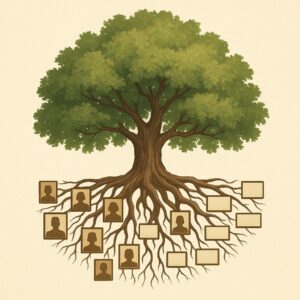
1.3 The universal need to leave a mark
The fear of being forgotten isn’t just individual. It’s collective.
- The pyramids in Egypt, epic poems, Renaissance portraits: all examples of the search for eternity.
- Today, with digital technology, the desire has transformed: we want to save photos, chats, voices, emotions.
- Not out of selfishness, but out of love: leaving something for those who come after us.
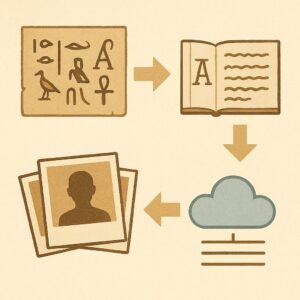
1.4 To remember is to love twice
When we remember someone who is no longer with us, we bring them back to life.
- Memory is an act of love that never ends.
- It allows our children and our children’s children to know our emotions.
- Being remembered is the purest form of emotional immortality.
“To be remembered is to live twice.”

1.5 Memory in world cultures
- In Mexico: The Day of the Dead celebrates ancestors with colors and altars.
- In Japan: Ancestor worship (Obon) keeps family ties alive.
- In Africa: Griots pass down tribal genealogies by word of mouth.
Every people, with their different languages, expresses the same need: never to truly disappear.

2. The new frontier: digital memory
2.1 Introduction
Where once gravestones or diaries were enough, today technology offers us new tools:
- Secure digital archives for photos, videos, texts, and voices.
- Platforms like LiveForever that preserve relationships, genealogies, and emotions.
- The possibility that our history will never be lost again.
We want to be remembered because memory is life beyond life.
We cannot stop time, but we can leave traces that speak of us, that console those who love us and that enlighten those who come after.
This is why LiveForever – The Keepers of Time and the LiveForever.cloud platform were created: to offer everyone a safe place where memories become eternal.
Don’t let time erase what you love.
Start preserving your memories forever on LiveForever.cloud
“To be remembered is to live twice.”
2.2 The best apps for saving photos and videos (with comparison).
Comparison of the best apps for saving photos and videos

2.2.1 Google Drive / Google Photos
- Pros : Offers 15 GB of free space shared with Gmail and Drive. Easy automatic backup from mobile devices and quality control (original or compressed) Dropbox+5 Android Central+5ente+5 MacPaw+14 Zapier+14 Wikipedia+14 .
- Cons : Free space uses up quickly, and unlimited options now require paid subscriptions Wikipedia Android Central .
2.2.2 iCloud (Apple)
- Pros : built into iOS/macOS, with plans from 50 GB to 12 TB and seamless Zapier Wikipedia sync .
- Cons : Only 5 GB free; less suitable for Android or Windows users. Reddit+5TechRadar+5Zapier+5 .
2.2.3 OneDrive (Microsoft)
- Pros : 5 GB free; ideal for those using Windows or Microsoft 365 (+ features like “Personal Vault”) Zapier+2Wikipedia+2 .
- Cons : Limited space; larger plans can be expensive.
2.2.4 pCloud
- Pros : Suitable for multimedia files—video streaming up to 4K, versioning, and a “lifetime” paid option Tom’s Guide+1 Zapier+1 .
- Cons : Lacks advanced features offered by others (like online editing or collaborative tools) Zapier TechRadar .
2.2.5 IDrive
- Pros : Excellent for complete backups, including file versioning, encryption, and the ability to save documents from Google Workspace or Microsoft 365 Zapier .
- Cons : The service can consume space if you don’t clean it regularly; the interface requires some familiarity.
2.2.6 Jottacloud
- Pros :
Unlimited space, automatic photo/video backup, great for users with lots of files Zapier+2TechRadar+2 . - Cons : Slow upload speeds above 5 TB; extra costs for multiple accounts Tom’s Guide+4TechRadar+4Zapier+4 .
2.2.7 TeraBox
- Pros : Offers a whopping 1TB free , and affordable Zapier+1 plans .
- Cons : 4GB single file limit on the free plan; ads and lower-quality video streaming Zapier Reddit.
2.2.8 Amazon Photos (for Prime members)
- Pros : Unlimited photo storage included with Prime membership (but video limited to 5GB) The Sun .
- Cons : Video storage is limited; for more video content, other services are required.
2.2.9 Enter Photos
- Pros : Open-source, end-to-end encrypted, cross-platform app with 10 GB free. Excellent privacy-centric choice and alternative to Google Photos or iCloud. Wondershare+3ente+3Zapier+3 .
- Cons : limited space and little known compared to the main services.
2.2.10 Summary table
| App / Service | Main advantages | Main disadvantages |
| Google Photos/Drive | 15 GB free, easy to use | Limited space, paid upgrade |
| iCloud | Great Apple integration | Limited outside the Apple ecosystem; only 5 GB free |
| OneDrive | Ideal for Microsoft users | Few GB free; expensive plans |
| pCloud | Streaming 4K, versioning, piano a vita | Fewer collaborative functions |
| IDrive | Backup completo + versioning | Requires proactive space management |
| Jottacloud | Unlimited space | Slower speeds, extra account costs |
| TeraBox | 1 TB free, cheap | Limitations on large files, advertising |
| Amazon Photos (Prime) | Unlimited photo usage with Prime | Only 5 GB per video, subscription required |
| Photos | Privacy & open-source | Limited space, less known |
| Unlimited backup (e.g. Backblaze) | Great for large backup volumes | Relatively high costs |
2.2.11 LiveForever
The simplest and safest solution for storing memories
Over the years, we’ve learned to trust major digital platforms to store our photos and videos. Google Photos, iCloud, OneDrive, Amazon Photos: each offers advantages, but they also have obvious limitations—from limited storage space to advertising, from hidden subscriptions to a lack of real control over our data.
LiveForever was created to overcome these limitations.
It’s more than an archive: it’s a safe, intimate place dedicated solely to memory.
- Simple : no technical skills required. Upload photos, videos, thoughts, and documents in just a few clicks. Everything is automatically organized and always accessible, even for those who aren’t computer savvy.
- Secure : Your data is not at the mercy of commercial logic. No advertising, no information is sold to third parties. The platform is built to last, with redundant backup systems and content encryption.
- Universal : While traditional apps only store files, LiveForever also stores connections —family bonds, friendships, intertwined histories. It’s not just an archive, it’s a tree of life that continues to grow.
- Eternal : Unlike platforms tied to a company or subscription, LiveForever is designed to last through time. Memories don’t expire: they remain forever, accessible to future generations.
In a world where data risks being lost between phone changes, expired subscriptions, or platforms closing, LiveForever is the only place that guarantees continuity, security, and simplicity .
It’s not just technology: it’s the certainty that our story will last.
2.3 How to avoid losing memories when you change phones.
Changing smartphones is now routine: new models, short-lasting batteries, convenient deals. But with changing phones comes the fear of losing what really matters: photos, videos, messages, notes, life memories .
Here’s how to protect yourself:
2.3.1 Always enable automatic backup
- Android → use Google Drive/Google Photos : in the phone settings, enable backup, so contacts, photos and videos are saved in the cloud.
- iPhone → use iCloud : with backup active you can recover everything (photos, chats, documents, apps) as soon as you set up the new device.
2.3.2 Use a dedicated storage service
In addition to phone backups, you can rely on services like OneDrive, Dropbox, Amazon Photos, and pCloud . These keep your files safe even if you lose or break your smartphone.
2.3.3 Save an offline copy
An external hard drive or USB stick may seem like an old-fashioned solution, but having a physical copy is still the safest way to protect yourself from unexpected events.
2.3.4 Choose an archive that lasts over time
The real risk isn’t just changing phones: it’s losing memories forever because they remain scattered across apps, different accounts, or services that shut down.
And this is where LiveForever comes in :
- It not only saves your photos and videos, but connects them to stories, connections, and loved ones .
- It’s simple: upload and find your memories with just a few clicks.
- It’s safe: no advertising, no data sold, no expiration.
- It’s designed to outlast phones and trends , so your memories live on for those who come after you.
2.3.5 Practical conclusion
When you change phones, don’t rely solely on your device’s memory. A lost memory is a piece of your life that never returns.
With a secure and dedicated system like LiveForever , you can be sure your story will remain intact, today and tomorrow.
2.4 Ideas for turning memories into gifts for family.
Memories aren’t just photographs or videos: they’re emotions that can become unique and unforgettable gifts . Transforming them into gifts means giving not just any object, but a piece of shared history.
2.4.1. Personalized photo album
- A classic that never loses its value. With online services, you can create elegant photo books, organized by year, holiday, or event.
- Each page can have captions, phrases, or anecdotes. It’s a way to relive family history together.
2.4.2. Calendar of Memories
- Each month tells the story of a special moment: a wedding photo, a birthday, a trip.
- Perfect for parents and grandparents, who can live every day filled with happy memories.
2.4.3. Emotional video
- Assemble photos and clips into a video with background music and personal messages.
- Ideal for anniversaries or milestone birthdays. It can be a touching experience for everyone to watch together.
2.4.4. Family painting or collage
- A meaningful photo printed on canvas, wood or metal.
- Or a mosaic that unites many small moments into one large image.
2.4.5. Jewels of Memory
- Bracelets, necklaces or key rings with engraved photos, or with QR codes that link to a digital album or a recorded story.
2.4.6. Diary of Memories
- Collecting written memories, letters, family recipes, and little secrets passed down in a book.
- It can be enriched with blank spaces, so future family members can continue to add pages.
2.4.7. Personalized Everyday Objects
- Mugs, blankets, puzzles, cushions with family photos.
- Every use becomes an opportunity to smile and remember.
2.4.8. Eternal digital memories with LiveForever
- In addition to physical objects, it is now possible to give the gift of access to a secure and permanent archive .
- With LiveForever you can create a shared space with photos, videos, stories, and family connections.
- A gift that never runs out: it remains alive and can be enriched by all family members.
In short: a gift based on memories is never banal, because it’s not bought: it’s crafted with love.
And with tools like LiveForever , this gift becomes not only emotional, but also eternal.
2.5 The 5 mistakes to avoid when storing digital memories.
We live in an age where almost everything important is captured by a camera or smartphone. Yet, more than ever, our memories are at risk of being lost. Not because of time, but because of bad digital habits.
Here are the 5 most common mistakes to avoid.
2.5.1. Keep everything on your phone only
A lost, stolen, or damaged cell phone can instantly erase years of photos and videos. Thinking, “It’s all there anyway,” is the first step toward loss.
Solution : Always enable automatic backup or periodically export your files.
2.5.2. Using too many services without order
Some photos on WhatsApp, others on Google Photos, a few on iCloud, and the rest on scattered hard drives: this is how memories become fragmented, difficult to find, and often duplicated.
Solution : Choose a main platform, organize your albums, and maintain a clear structure.
2.5.3. Rely only on physical media
CDs, DVDs, USB sticks, hard drives: none of these guarantee eternal life. Media deteriorates, formats become obsolete, and data can become corrupted.
Solution : Keep at least one copy in the cloud, in addition to your local copies.
2.5.4. Don’t think about safety
Many people underestimate the fact that photos and videos contain sensitive data. Unprotected archives or accounts without secure passwords expose memories to the risk of theft or accidental deletion.
Solution : Use strong passwords, enable two-step verification, and choose privacy-friendly services.
2.5.5. Believing that it is enough to “save” without contextualizing
A photo without a name, date, or history becomes an anonymous image. Twenty years from now, no one will remember where, when, or who was present at that moment.
Solution : Always add descriptions, tags, names, and details. Sharing memories is the best way to keep them alive for future generations.
2.5.6 Conclusion
Preserving digital memories isn’t just a technical act, but an act of love. Avoiding these mistakes means ensuring that the stories, emotions, and faces that fill our lives today can continue to exist tomorrow.
And this is where LiveForever comes in : a platform designed to archive, protect and contextualize memories , keeping them alive and accessible over time, without fragmentation or the risk of obsolescence.
2.6 How to Keep Your Digital Memories Forever
Open the LiveForever app; the first time you log in, you’ll be given 1,000 credits. Enter your details and then the digital memories you treasure most. Then enter your blood, heart, and friendship ties. Friendship ties should be selected from among your most important friendships.
Now distribute the credits among the people you entered and yourself.
3. Stories and Memories: The Power of Storytelling to Transcend Time
3.1 Why telling your story makes you immortal
Every life is a unique intertwining of faces, emotions, and choices. Many think that, with death, everything ends. But the truth is that what remains of us is not our bodies, nor the objects we own: it’s the story we leave behind .
3.1.1. A track that transcends time
Words, memories, and stories have the ability to survive beyond our physical presence. Telling your story means leaving a trace that others can read, hear, and treasure. In this way, our voice lives on.
A memory held only in one person’s mind dies with them. But when it is told, written, recorded, it transforms into collective memory. It is this transition—from the individual to the community—that makes us immortal.
3.1.3. You don’t have to be famous
You don’t have to be a hero, an artist, or a historical figure to be remembered. Every person has a story worth sharing: family traditions, fears overcome, loves experienced, dreams pursued. Eternity lies in the everyday.
3.1.4. Storytelling is an act of love
When we share our story, we don’t just do it for ourselves: we do it for those who come after us. We give our children, grandchildren, and future generations a piece of our experience, a wealth of emotions and lessons that continue to nourish them.
3.1.5. True immortality
There is no immortality of the body, but there is the immortality of memory. Telling your story is the simplest and most powerful way to live forever in the thoughts and hearts of those who love you.
In short : telling your story is the way to conquer time.
It’s telling the world: “I was here, and what I experienced will live on, because someone will remember it.”
3.2 How to write a diary that will last over time
A diary isn’t just a collection of pages: it’s a witness to our lives, a bridge between the present and future generations. Writing it carefully means transforming emotions and memories into a lasting legacy .
3.2. 1. Write with authenticity
You don’t have to be a writer. Honesty matters: real emotions, everyday thoughts, joys and difficulties. The strength of a diary lies precisely in its authenticity.
3.2.2. Give context to memories
Don’t just recount the facts: add details like dates, places, and people involved. A photo without a name is forgotten; a memory with context becomes a life story.
3.2.3. Alternate facts and emotions
Don’t just record what happens, but also how it makes you feel. The value of a diary lies in its duality: the narrative and the soul.
3.2.4. Choose a format that lasts
Paper : a special notebook or diary can become a precious object, to be passed down.
Digital : apps and platforms (such as LiveForever ) allow you to enrich your diary with photos, videos and audio, ensuring their preservation and sharing.
3.2.5. Organize and protect
Use chapters, titles, or tags to make it easier to find. If digital, activate backup and protection systems. If paper, store it in a safe place.
3.2.6. Turn it into a dialogue
A diary can also be a message for those who come after it: writing with your mind on whoever will read it one day will give it more value and meaning.
3.2.7 Conclusion
A diary that lasts over time is not just a personal memory, but a gift to future generations.
Tell us who you are, what you’ve experienced, and what you’ve learned: so that even when time has run its course, your voice will continue to speak.
3.3 Examples of people who have left a legacy of memories.
Memory isn’t measured only in history books: it’s made up of gestures, stories, and traces that survive beyond life. Some people have left behind a legacy of memories so powerful that they continue to inspire entire generations.
3.3. 1. Anna Frank
A young woman who, with her diary, transformed the fear and darkness of war into a universal testimony.
Her legacy is not made of heroic deeds, but of simple, sincere words that gave voice to millions of shattered lives.
3.3. 2. John Paul II
Not just a pontiff, but a figure capable of leaving a living legacy of gestures, travels, and messages of peace.
His charisma has impacted entire generations, and his memory remains a source of spiritual inspiration.
3.3. 3. Frida Kahlo
He transformed pain and suffering into art.
Each of his paintings is a piece of personal and collective memory, which continues to speak to anyone seeking strength in authentic self-expression.
3.3. 4. The grandparents of every family
No need for famous names: it’s often grandparents who leave the most precious legacy.
The stories told at the table, the recipes passed down, the yellowing photographs: small treasures that live on in succeeding generations.
3.3.5. Steve Jobs
He left a legacy of innovation and vision. Not just technological products, but a new way of looking at the relationship between man and machine.
The memory that remains of him is not just tied to his enterprise, but to his message: “Stay hungry, stay foolish.”
3.3. 6. Mother Teresa of Calcutta
His legacy lies not in material possessions, but in the memories of the people he served with love and dedication. The memory of those gestures lives on throughout the world.
3.3.7 Conclusion
Whether they are historical figures, artists, innovators, or our own family members, those who leave a legacy of memories demonstrate that true immortality is not physical, but emotional and narrative.
With LiveForever , this legacy does not remain scattered in the fragments of memory, but becomes a shared heritage , always accessible and ready to be passed down.
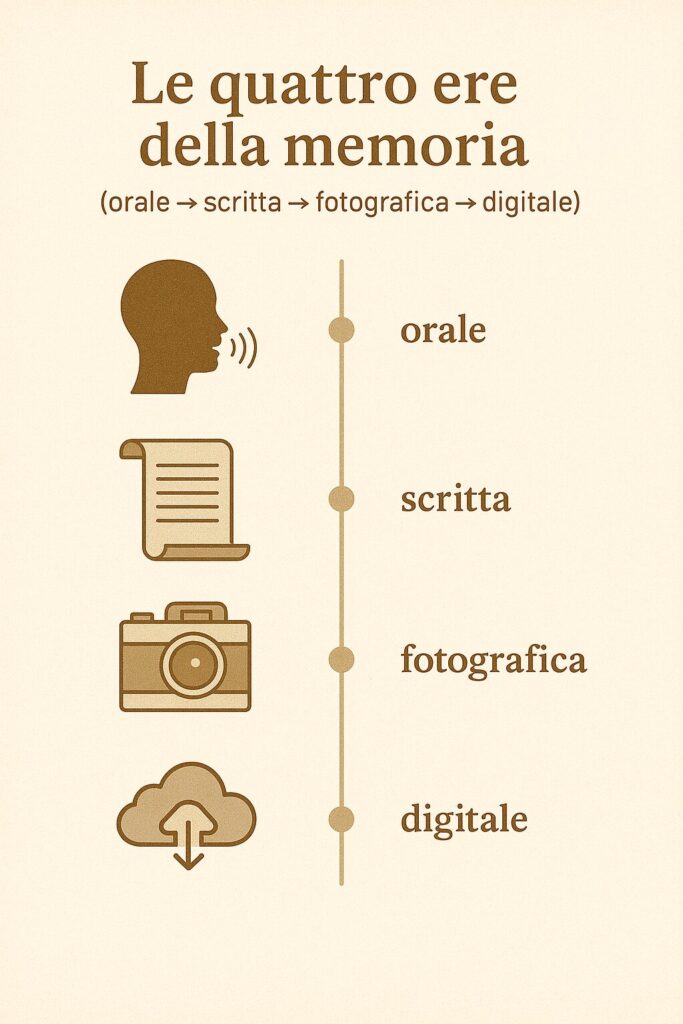
3.4 From oral to digital storytelling: the evolution of memory.
The history of humanity is, first and foremost, the history of its memory . Every era has invented a way to prevent memories from fading, transforming them into a legacy for those who came after.
3.4. 1. The era of oral storytelling
Before writing, memory traveled by word of mouth. Communities gathered around the fire, and wise men recounted myths, genealogies, and legends.
The limitation was clear: with the death of the narrators, the memory often faded with it. But this method of transmission was intimate, alive, and charged with emotion.
3.4. 2. The Age of Writing
With the invention of hieroglyphics, clay tablets, and, later, paper, memory became tangible.
Storytelling no longer depended solely on the spoken word, but on signs fixed forever. Books, chronicles, letters: all this made memory more stable and universal.
3.4. 3. The era of photography and cinema
In the nineteenth century, memory began to transform into images. Photographs captured faces and moments that would never return, while cinema conveyed emotions and moving stories.
For the first time, memories weren’t just words, but living images .
3.4. 4. The digital age
With the arrival of computers, social media, and smartphones, memories multiply: billions of photos, videos, and messages are created every day.
The risk, however, is that this abundance can turn into chaos: scattered memories, scattered across accounts and devices, often doomed to oblivion because they’re unorganized or easily lost.
3.4. 5. The Age of LiveForever: Eternal Memory
Today, a new era begins: one in which memories are not only preserved, but connected .
LiveForever combines the simplicity of digital with the depth of family heritage: it not only archives photos and videos, but interweaves them with connections, stories, and people.
It is the next step in evolution: from oral storytelling, which once united communities, to digital storytelling, which can now unite generations.
3.4.6. Conclusion
Memory has transformed, but it has never lost its purpose: to make present what is at risk of disappearing .
From the hearth of its origins to digital archives, every step has been an attempt to conquer time.
With LiveForever, this attempt becomes reality: memory is no longer destined to be lost, but to last forever.
4. Technology and eternity: the new frontier of digital memory
4.1 How AI, cloud, and digital archives enable preservation.
Humans have always sought to defy oblivion. Today, thanks to technology, tools exist that make this challenge more concrete than ever: artificial intelligence, the cloud, and digital archives .
4.1.1. The Cloud: The Invisible House of Memories
- Data is no longer locked away in a single device (phone, PC), but is stored on secure servers distributed around the world.
- This means that even if you lose your smartphone or the hard drive fails, your memories remain safe.
- The cloud provides redundancy : each file is saved in multiple copies, in different locations, so that it cannot be lost.
4.1.2. Digital archives: order and duration
- It’s not enough to save: you need to organize.
- Digital archives allow you to classify photos, videos, documents, and stories, associating them with dates, people, and events.
- Unlike old physical media (CDs, VHS, yellowing paper albums), digital archives do not deteriorate: if managed correctly, they guarantee long-term preservation .
4.1.3. Artificial Intelligence: bringing memories to life
- AI doesn’t just store, it helps find and enhance memories:
- It recognizes faces, creating automatic albums of loved ones.
- Sort photos and videos by locations, dates, and events.
- It can even generate narratives, captions, and connections between memories, making them easier to share and understand.
- AI thus becomes a sort of “intelligent guardian” that does not allow memories to remain forgotten in the digital depths.
4.1.4. The next step: eternal memory
Clouds and archives protect files, AI enhances them. But the real leap occurs when these technologies come together in a platform designed not just to preserve, but to pass on .
With LiveForever , memories don’t remain isolated: they are connected across people, generations, and stories, creating a living legacy that transcends the limitations of any single technological medium.
4.1.5. Conclusion
AI, cloud computing, and digital archives represent the modern answer to an ancient need: not letting life fade into oblivion .
Today, technology is no longer just a tool: it is the bridge that makes eternal, accessible, organized, and passable memory possible.
4.2 LiveForever: A safe and human archive
Many digital archives simply store files. They offer space, search algorithms, and little more. But memories aren’t just data: they are traces of life, emotions, and connections.
This is where LiveForever stands out:
4.2.1. As safe as a digital archive
Data is protected by backup and encryption systems.
No advertising, no sale of information to third parties.
Continuity guaranteed: memories are not lost across platforms or forgotten on obsolete devices.
4.2.2. Human as a family history
Each memory does not remain isolated, but is connected to people, bonds and generations.
Not just photos or videos: LiveForever preserves emotions, stories, tales.
The platform isn’t cold technology, but a warm and personal place where you can recognize and find each other.
4.2.3. The union of technique and emotion
LiveForever is both archive and story:
Archive, because it offers order, protection and durability.
Storytelling, because it restores meaning to memories, transforming them into a living legacy.
4.2.4 Conclusion
LiveForever is the secure archive everyone desires to protect their memories, but it is also the human archive that no technology alone can create.
It demonstrates that the future of memory is not cold and impersonal, but warm, shared, and eternal.
4.3 Can artificial intelligence preserve our souls?
The soul has always been a mystery that eludes scientific definition. Philosophers, religious figures, and scientists have attempted to understand it: is it the divine spark, consciousness, the sum of emotions, or perhaps memory itself?
Today, with the advent of artificial intelligence , the question becomes more pressing: can technology really preserve something so profound?
4.3.1. AI stores data, not feelings
An algorithm can store billions of pieces of information: photos, videos, texts, even voice recordings. But these remain external fragments : they do not reproduce the interiority, the subjectivity, that mysterious core we call “soul.”
4.3.2. Memory as a bridge to the soul
Yet, if the soul manifests itself in our experiences, relationships, and emotions, then preserving memories means preserving a part of it.
An AI that organizes, connects, and renders these memories doesn’t capture the soul, but retains its imprint , like a precious cast.
4.3.3. Illusion and risk
There is, however, a danger: believing that a digital system can replace the soul itself.
AI can imitate, simulate, even “speak like us” thanks to linguistic models, but it is not us.
Eternal memory risks becoming a surrogate if we don’t experience it consciously.
4.3.4. The possibility of a new kind of immortality
If we think of the soul not just as a spiritual entity, but as a trace of who we were , then AI can offer it continuity.
Not biological immortality, but narrative immortality : the possibility that future generations might encounter our voice, our thoughts, our memories.
4.3.5. LiveForever as a Soul Imprint Keeper
LiveForever does not promise to capture the soul in the religious sense, but to preserve its reflection:
- The memories that shaped us.
- The relationships that made us alive.
- The emotions that tell who we were.
It’s a way to leave a real and tangible presence , capable of continuing to speak even when we are no longer here.
4.3.6 Conclusion
Artificial intelligence cannot create a soul, nor replace it.
But it can preserve its traces, organize its memory, and make it accessible to the future.
And perhaps this is precisely the most human meaning of technology: not to steal the mystery, but to protect it .
4.4 The difference between hard disk, cloud and eternal archives .
Humans have always sought ways to preserve what they love. In the digital world, memories become files: photos, videos, documents. But not all media have the same value. Understanding the difference between hard drives, the cloud, and eternal archives means understanding how our relationship with memory is changing.
4.4.1. Hard disk: fragile memory
- This is the most common and immediate method: saving files to your computer or external drives.
- Advantages : speed, direct control, low costs.
- Limitations : physical fragility (breakage, loss, wear), format obsolescence, risk of total loss without backups.
The hard disk is a personal memory, but it is fragile and temporary.
4.4.2. Cloud: distributed memory
- Files no longer remain on a single device, but are saved on remote servers and accessible from anywhere.
- Advantages : increased security, redundancy, global accessibility.
- Limitations : dependence on subscriptions, risk of service closure, fragmentation across multiple accounts, potential commercial use of data.
The cloud is a powerful storage solution, but it’s still “conditioned” by economic and technical considerations.
4.4.3 . Eternal archives: memory becomes legacy
- They don’t just store files: they contextualize, organize, and connect them to people and generations .
- Advantages : designed to last beyond time and devices, not just archives but places of storytelling and connection.
- Example : LiveForever , which combines digital security, human value, and intergenerational continuity.
The eternal archive is memory transformed into cultural and emotional heritage , a legacy destined to live forever.
4.4.4. Conclusion
- The hard disk is durable, but it can break.
- The cloud protects, but remains tied to a company and a subscription.
- The eternal archive preserves forever , because it does not treat memories as simple files, but as fragments of life to be passed down.
It’s the difference between having data and leaving memory .
Today, almost all of us entrust our most precious moments to social media: birthday photos, travel videos, anniversary messages. But social networks aren’t memory archives : they’re tools designed for something else. That’s why they’re not enough to truly preserve memories.
4.5. 1. Social media is ephemeral
A post shines for a few hours, then fades into the endless stream of content. Even if it remains online, it’s as if it were buried: invisible, lost among millions of other posts.
4.5. 2. Social media isn’t yours
Platforms can change rules, close accounts, and delete content without notice. Uploaded memories don’t belong entirely to you: they belong to the system that hosts them.
4.5. 3. Social media fragments memory
Some on Facebook, some on Instagram, some on WhatsApp. Memories remain scattered, duplicated, or confused, without a logical thread to organize them or make them easily retrievable.
4.5. 4. Social media is about visibility, not retention
These tools are designed for sharing in the present, not for preservation over time. The logic is based on likes and algorithms, not curation and longevity.
4.5. 5. Social media doesn’t really tell your story
A posted photo is just a fragment. Without context, without connections, without the possibility of intertwining memories and people, it becomes an isolated image. Not a legacy.
4.5.6 The real alternative: a dedicated archive
If we want memories to survive, we need a place designed not for immediate consumption, but for preservation and transmission .
Here’s the difference with LiveForever :
- Organize and connect memories.
- It protects them over time, without algorithms or advertising.
- It makes them a shared heritage, not just content.
In short : social media displays memories, but doesn’t preserve them.
Only a secure and human archive can transform them into what they truly are: fragments of life destined to last forever .
4.6 The future of memory: virtual reality and 3D archives.
Memory is no longer just the written word or two-dimensional image: it is entering a new era, in which virtual reality and 3D archives are changing the way we remember and transmit.
4.6.1. From photography to immersive experience
Photos capture a moment, videos tell a story.
Virtual reality, on the other hand, allows you to relive places and emotions : entering the reconstruction of your grandparents’ house, walking the corridors of a now-demolished school, rediscovering spaces that seemed lost.
4.6.2. 3D Archives: Memory Becomes Space
A 3D archive does not just store files, but also digitalized environments and objects .
- A 3D recreated room can contain photographs, letters, videos.
- Objects become interactive: a book to browse, a clock to observe, a piece of furniture to open.
Memory is no longer passive: it is a place to be explored .
4.6.3. Amplified emotions
By wearing a VR headset, memories are no longer viewed from afar: they are experienced.
You can “meet” the voice of a family member, re-listen to a story while looking into their digital image’s eyes, and perceive the depth of bonds.
4.6.4. The role of artificial intelligence
AI enables the reconstruction and organization of memories in 3D environments, helping to connect them. It
not only archives, but creates immersive narratives : a photo album can transform into a virtual room full of faces and voices.
4.6.5. LiveForever and the memory of the future
LiveForever represents a step toward this evolution: from a secure archive to a personal memory museum .
In the future, every family could have their own “virtual space” where they can move, meet, and relive the stories of their loved ones.
Not just saved data, but experiences that live on . liveforever.cloud
4.6.6 Conclusion
The memory of the future will no longer be two-dimensional. It will be immersive, interactive, three-dimensional.
A place where generations will not only remember , but live again , transforming memories into shared and timeless experiences.
4.7 Data entry and storage strategy
The idea of retaining people’s data indefinitely is complex and has led us to address the following issues:
1) Choose a compact and durable storage medium.
2) As technology changes, migrate archives to more modern media.
3) Store archives in a place with controlled temperature, humidity, and dust, safe from vandalism.
4) Duplicate archives and place them in geographically remote locations to protect them from catastrophic events.
5) Have an organization that updates the data and programs in archives that last forever.
6) Have a self-sustaining organization to cover expenses.
Use a compact and durable storage medium
Currently, Blu-ray technology appears to be the most durable in terms of data retention.
Direct experience is not possible because these DVDs were developed recently, but they have hypothetical and perhaps optimistic lifespans of 1,000 years.
It’s easy for a manufacturer like Milleniata to assume a lifespan much longer than the company’s realistic lifespan, so we should be cautious about overly optimistic statements.
We’ve decided that from the beginning of the Live Forever project, we’ll begin archiving data on Blu-ray discs, with the goal of regenerating the archive every 50 years, or sooner if technology offers more advantageous devices (and thus answer point 2).
At the same time, the data is entrusted to the cloud, specifically to Aruba, a leader at this time (and thus answer point 4).
Furthermore, the data is periodically sent to organizations that are expected to live forever, with data managed by churches and government organizations.
Store archives in a place with controlled temperature, humidity and dust
The first archives, in the form of Blu-ray DVDs, will be stored in their original dustproof container and in an alarmed safe. The safe is located in an inhabited area, where the temperature and humidity are not subject to significant fluctuations thanks to the heating and air conditioning systems.
Have an organization that updates data and programs in archives that lasts forever.
Having an organization that updates data and programs in archives and lasts forever is a rather challenging goal. For an organization to last, certain requirements are necessary:
• the presence of a leader who motivates and manages the organization
• a system for replacing the leader
• a system for selecting and motivating collaborators
• a certain level of profit
From a functional point of view the organization is divided into:
Leader. Performs asset and financial management functions. Leads the archivist team for strategic decisions. Responsible for data preservation.
Archivists. These are those authorized to directly enter data, manage error reports, correct and delete disruptive or duplicate profiles, and participate in the platform’s strategy. They are the only ones who can access the back office.
Junior Archivists. These are those who register and then enter data for themselves and others. They are authorized to enter data directly. They help resolve disputes about data they enter and provide user authorization.
Users. These are those who register and then add their family members, completing their activities on the platform.
Visitors. All the curious, family members, and researchers who use the platform out of curiosity or for research.
Each function can perform those of a lower level. The leader is chosen based on vocation from the archivist staff by the outgoing leader or, if deceased, by all staff members.
Have an organization that is financially self-sustaining to cover expenses.
Liveforever must bear costs related to the project:
• Server maintenance costs
• Team activities (software development and maintenance, legal, commercial, etc.)
• Data storage equipment
• Commercial: purchase of spaces to publicise and promote the activity
Initial investments are currently being supported by project leader Mauro Pompetti, and by voluntary work from friends who believe in the initiative.
Meanwhile, plans are underway to create financial independence for the project through the following activities:
- Making ‘Liveforever’ a non-profit foundation eligible for 5 per thousand tax returns
- Bring the project to Kickstarter and Indiegogo
- Sell virtual flowers to be given to users to honor their memory
- Selling virtual kisses and caresses to honor the living
- Sell quality family tree prints
- Sell quality presentation videos
- Organizing events to meet relatives
- Travel organization to meet distant relatives, travel and accommodation
- Promotion and gift transfer for new births
- Deliver flowers or charity items in honor of deceased persons
5. LiveForever Book Guide – Keepers of Time
A novel that intertwines memory, technology, and emotion, taking the reader on a journey that is not only narrative, but also cultural and philosophical.
This guide helps you navigate the chapters, themes, and main characters, offering food for thought beyond the plot.
5.1 Chapter 1 – Between Life and Memory
- Theme : the thin line between existence and memory.
- Characters : Paula and Oliver, souls who introduce the reader to a symbolic dimension.
- Reflection : What remains of us when our bodies are gone? Memory as an invisible bridge between generations.
5.2 Chapter 2 – Marcus’ Awakening
- Theme : Discovering your personal mission.
- Characters : Marcus, protagonist, young visionary.
- Reflection : How do ideas destined to change the world arise?
5.3 Chapter 3 – The Team
- Topic : The importance of skills and individual differences.
- Characters : Hannibal, Alex, Luke, Simon, Julius and Joana.
- Reflection : No revolutionary project is born alone.
5.4 Chapter 4 – Marcus the Creator
- Theme : the relationship between fragility and talent.
- Characters : Marcus as a child, his father Oliver.
- Reflection : Strength often comes from internal wounds.
5.5 Chapter 5 – Dream or Reality
- Theme : The thin line between vision and madness.
- Characters : Marcus, Joana, dreamlike historical figures.
- Reflection : Is it madness to desire the eternity of memory, or is it humanity’s next step?
5.6 Chapter 6 – Joana in the team
- Topic : ethics, philosophy and spirituality.
- Characters : Joana, supported by a priest, a Buddhist monk, a philosopher and a psychologist.
- Reflection : Technology must be balanced with an ethical conscience.
5.7 Chapter 7 – The Beginning of the Revolution
- Topic : birth of the project and first obstacles.
- Characters : Marcus, Hannibal, Joana, Julius.
- Reflection : every innovation encounters resistance, both internal and external.
5.8 Chapter 8 – The funds
- Topic : trade-offs between ideals and economic needs.
- Characters : Giuliana Velardi, the governments.
- Reflection : To what extent should we accept money if it puts our founding values at risk?
5.9 Chapters 9–14
- Themes : sabotage, betrayal, computer and human challenges.
- Characters : Hannibal as antagonist, Marcus as resilient leader, Joana as critical conscience.
- Reflections : memory is a power, and like all power it triggers conflicts.
5.10 Chapter 15 – The Circle Closes
- Theme : Passing the baton between generations.
- Characters : Marcus as an elder, Oliver as a symbolic presence, Luke as an heir.
- Reflection : The ultimate meaning of life is to leave something that remains.
5.11 Chapter 22 – The Gateway Between Worlds
- Theme : Beyond memory, communication between the living and the dead.
- Characters : Marcus (posthumous), Oliver.
- Reflection : Can digital memory become a bridge between dimensions? Is it science or spirituality?
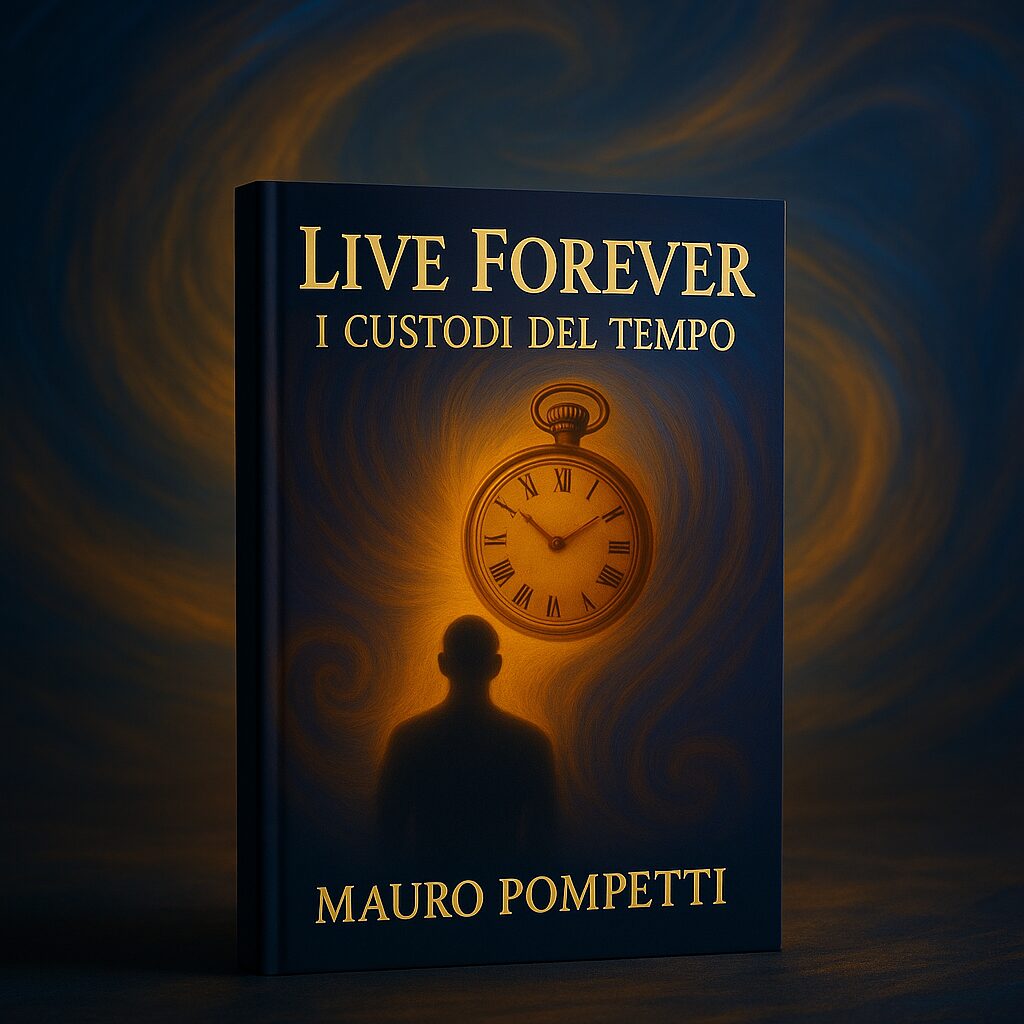
5.12 Cross-cutting themes of the book
- Memory : from personal act to collective heritage.
- Technology : a tool of eternity, but also a place of risk.
- Ethics : the responsibility of giving shape to a memory that never dies.
- Family and bonds : memories have value because they are intertwined with loved ones.
- Philosophy of Time : The novel invites us to ask ourselves what it really means to “live forever”.
This guide shows that LiveForever – The Keepers of Time is not just fiction, but also cultural literature : a text that intertwines science, philosophy, ethics and sentiment.
5.13 The 5 Life Lessons from LiveForever – The Keepers of Time
The novel LiveForever – Keepers of Time is not just a compelling story: it’s also an inner journey that leaves the reader with profound reflections on the meaning of memory, time, and relationships.
Here are five universal lessons that emerge from its pages.
5.13. 1. Memories are the true treasure we possess
Every moment we experience fades, but what remains is the memory we know how to preserve and pass on. It’s not objects or material achievements that stand the test of time, but shared moments and the emotions they generate.
5.13. 2. Memory is not only personal, it is collective
A memory never belongs to just one person: it lives in connections. Just as a family recognizes itself in the memories of its ancestors, humanity grows through the stories it passes down. Shared memory is the root that unites us.
5.13. 3. Technology is neutral: it depends on how we use it.
In the novel, the LiveForever platform can be seen as an instrument of light or dark power. The lesson is clear: every innovation is a potential gift, but requires ethical responsibility.
5.13. 4. Time does not erase, it transforms
What appears as pain today can become strength and wisdom tomorrow. The experience of Marcus and the other characters shows that the past should not be denied, but reinterpreted. Time is not an enemy: it is a teacher who teaches through memory.
5.13. 5. True immortality is the love we leave in others
We don’t live forever as bodies, but we can do so as a presence in the hearts of those who remember us. The book’s ultimate lesson is that being “guardians of time” means safeguarding love, making it eternal, and allowing it to continue generating life.
Conclusion
LiveForever – Keepers of Time invites you to look beyond the plot and grasp a profound message: the future of humanity depends on how it will be able to preserve its memories and transform them into vital energy.
5.14 Why read a novel that talks about eternal memory?
We live in an age where everything moves so quickly: messages are deleted, photos remain buried in digital archives that no one opens anymore, and even memories risk fading under the weight of daily haste. In this context, a novel that addresses the theme of eternal memory becomes not just a read, but an experience.
5.14.1. Because it concerns us all
There is no human being who hasn’t asked himself, at least once: “What will remain of me when I’m no longer here?”
A novel that speaks of eternal memory is therefore not science fiction, but a universal reflection on what makes us human.
5.14.2. Because it combines emotion and technology
It’s not just a story: it’s a bridge between the deepest feelings and the possibilities offered by new technologies.
The reader not only experiences the plot, but also finds himself questioning how digital memory can change our relationship with time and with those we love.
5.14.3. Because it offers a different perspective on time
The novel reminds us that time isn’t just a line leading to oblivion, but can become a circle in which memories return and live on. Reading about eternal memory means discovering a new way of looking at life.
5.14.4. Why it is an act of awareness
Entering a story about eternal memory means slowing down, reflecting, and recognizing the value of every moment. It’s an invitation not to let our memories remain trapped in devices, but to consider them a living part of who we are.
5.14.5. Why it can inspire real choices
A novel doesn’t just change your thoughts: it can change your actions. After reading, perhaps the reader will truly want to better preserve their own story, that of their family, their loves.
Ultimately, reading a novel about eternal memory means reading about oneself : about one’s fears, dreams, and the most human desire there is— not to be forgotten .
5.15 Difference between the book and the platform: history and reality
5.15.1 The book: the story
LiveForever – Keepers of Time is a novel .
Through characters, dreams, conflicts, and ethical reflections, it explores the idea of a platform capable of immortalizing people’s memories. It is a symbolic narrative, where reality and imagination intertwine: the reader experiences emotions, asks questions, and empathizes.
The book is history, metaphor, and philosophy : it invites reflection on time, emotional legacy, and the meaning of emotional immortality.
5.15.2 The platform: the reality
LiveForever.cloud is a concrete project.
It’s no longer a literary fantasy, but a digital tool that allows you to:
- save photos, videos, thoughts and documents,
- creating bonds between people and generations,
- to safely safeguard individual and collective memory,
- making memories available today and in the future.
The platform doesn’t tell a story: it’s the story of those who use it. It’s practical, simple, accessible to everyone, and was created with the mission of providing continuity to memories without letting them get lost between phones, hard drives, or social media.
5.15.3 The meeting between the two dimensions
The book excites and inspires, the platform creates and preserves.
One is born of imagination, the other of engineering and technology. Together, they form a unique duo:
- the novel ignites the desire for the immortality of memory,
- The platform makes this possible in real life.
In short: the book is the vision, the platform is the implementation.
Story becomes reality, and reality feeds on the evocative power of story.
5.16 Top Reviews (from Amazon.it)
Paola Buccinotti – 5 out of 5
“Emotions between past, present, and future. A constant suspense for something to come true and many moments of reflection. A beautiful story. I recommend it.”
Facebook+11Amazon+11The Book Pub -+11
Massimiliano – 5 out of 5
“Beautiful novel, I was moved. I recommend it and enjoy the read.”
Amazon
The book currently has an average rating of 5.0 out of 5 , based on 3 reviews, all five-star Amazon reviews .
5.16.1 Cultural insights (editorial reviews)
The Book Pub (29 maggio 2025)
A praise of the vision of the novel as a bridge between fiction and reality:
The book constructs a story that has the courage to face death not with fear, but with creativity.
And she adds:
Each chapter not only takes us forward in Marcus’s story, but also questions us about how we protect what we love, how we would like to be remembered.
Romantically Fantasy Website+8The Book Pub -+8Google Play+8
5.16.2 Immediato.net (May 23, 2025)
It highlights the innovative narrative structure:
The book does not develop along a traditional timeline, but adopts a non-linear structure, intertwining episodes and reflections in a…
Romantically Fantasy Site+11Immediate+11Daily State+11
5.16.3 Summary of readers’ impressions
| Source | Key points |
|---|---|
| Paola & Massimiliano (Amazon) | An emotional, thoughtful, engaging novel. |
| The Book Pub | Deep insight: pain transformed into creativity; ethical questions. |
| Immediato.net | Unconventional narrative structure, intertwining time and reflection. |
5.16.4 Conclusion
The reviews all converge on a very positive impression: LiveForever – The Keepers of Time is perceived as a novel that excites and makes you think, capable of uniting feelings and technology with a writing style that goes beyond traditional linearity.
6. How digital immortality can change our lives now
Digital immortality isn’t just a concept of the future or science fiction: it can transform our present.
Knowing that our thoughts, emotions, and memories will not be lost offers us a different perspective on daily life. Every choice, every word, every gesture becomes part of a memory that endures and can inspire those who come after us.
Today, being able to build a personal digital archive means:
- Making sense of the present: narrating and recording our lives helps us understand who we are and what we want to leave as a legacy.
- Cultivating deeper relationships: Sharing authentic memories with our loved ones strengthens bonds, creating a bridge between generations.
- Overcoming the fear of oblivion: The knowledge that not everything will vanish with us reduces anxiety about the passing of time.
- Finding motivation: Knowing that our experiences will endure, we are more driven to live authentically and value what we do.
In this sense, digital immortality isn’t just about “never dying” in memory, but about learning to live better now, with greater awareness and intensity.
6.1 And if one day…
One day, many years from now, no one will know your name anymore.
Documents will vanish, photos will fade, and social media… will become mere digital dust. Even today, phone memory fills up and memories are lost: photos that can no longer be found, letters forgotten in old drawers, messages that vanish.
But we still have a chance. Someone might find you. Not by chance. But because you’ve left a mark, or because you’re tied to someone… by blood, love, or true friendship. And perhaps, a hundred years from now, one of your descendants will search for their ancestors.
And he will find you.
Not just your name… but your voice, your face, everything you’ve said, experienced, and accomplished. This is what LiveForever is for: it’s a secure, easy-to-use archive that keeps all your most important memories in one place, organized and always accessible.
No more fragments scattered across phones and drawers, but your story preserved forever, ready to be found to renew your light and that of your loved ones.
Anyone can be part of LiveForever, but I want your action to inspire us to live better today.
It doesn’t matter how many followers you have, but what traces you have left.
Have you loved? Have you helped a person, an animal, a plant?
Have you built, taught, inspired?
Have you done something worth remembering, showing, explaining?
Join Live Forever, even if you’re not famous, but with the goal of always being better in body and spirit.
And then share anything that might be useful to those who will be watching you, be they children, grandchildren, or future generations.
Share your accomplishments, the struggles you’ve endured, the best and worst moments of your life. Even a joke or a prediction about what you think the future will be like.
Maybe you can guess.
E se vuoi cominciare oggi, ecco da dove partire.
6.2 Every thought is a seed
“Every thought we choose is a seed we sow into our future. If you want to attract love, peace, and fulfillment, cultivate the same qualities within yourself.”
This Decalogue is a practical tool for living according to this universal law:
- Cultivate mindfulness every day
- Practice authentic gratitude
- Nourish your body with respect and simplicity
- Be honest, even when it’s uncomfortable
- Forgive deeply (yourself and others)
- Create more than you consume
- Give time or love without expecting anything in return
- Cultivate nourishing and healthy relationships
- Embrace suffering as a teacher, not an enemy
- Keep wonder alive
6.3 Live Forever
By purchasing the book, you’ve also contributed to this project. We’re grateful and are giving you 3 years of free use of the platform to preserve your memories.
Start uploading your memories to Live Forever now. Your most meaningful photos, letters, and videos will be a pleasure to share, and Live Forever will keep them safe for you.
Keep your story on LiveForever: organized, secure, and always accessible.
Sign up now on www.liveforever.cloud